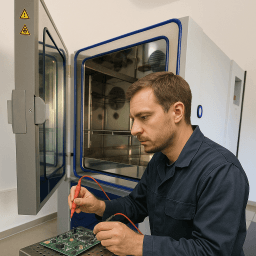
The production of electronic devices is a complex journey that requires careful planning starting from the initial design phase.
PCBs are a critical component – any oversights during their preparation can significantly drive up costs and extend lead times.
Below, we discuss the most common design and manufacturing mistakes that drive up costs, and we provide tips on how to avoid them.
1. Poor Component Placement
This is one of the most common issues. Improper component layout can lead to signal interference, mechanical collisions or additional difficulties during the assembly process.
How to avoid it?
Collaboration between designers and the manufacturer is key. A thorough analysis of component placement, considering technological requirements as early as the design stage, helps prevent costly revisions.
2. Incorrect Tolerances and Trace Dimensions
Traces that are too thin are prone to damage, while insufficient spacing between them can lead to short circuits. Such errors usually stem from failing to account for the technological limitations of the production process.
How to avoid it?
Follow the PCB manufacturer’s guidelines regarding minimum trace widths and clearances. Ensure the design is fully compatible with the production line’s capabilities.
3. Incomplete or Unclear Technical Documentation
Even the best design can cause issues if it is not accompanied by complete and transparent documentation. Missing layer descriptions, assembly data, or a Bill of Materials (BOM) can lead to errors and production downtime.
How to avoid it?
Ensure your documentation package is clear and comprehensive: include Gerber files, a Bill of Materials (BOM), schematics, and assembly instructions. A well-prepared project package saves time and reduces stress for the manufacturer – ultimately leading to lower final costs.
4. Skipping Prototype Testing
Skipping the prototyping stage is a major risk. Errors might only surface after mass production has started, which can result in massive costs and significant delays.
How to avoid it?
Plan for prototype testing and final inspection during the design phase. It is an investment that prevents much larger expenses down the road.
5. Misalignment Between Design and Assembly Technology
Using an unsuitable assembly method can lead to component loss, soldering errors, and the need for additional repairs.
How to avoid it?
The design must be tailored to the specific assembly technology (e.g., SMT, THT). Clearly define the intended method at the start of the project to avoid any discrepancies between the design and the production line.
Summary
Most errors can be avoided with a well-prepared design and close collaboration with the manufacturer at every stage of the process. Meticulous planning not only reduces costs but also significantly shortens the time-to-market for your device.
At Prodel, we provide end-to-end services – we both design and manufacture electronics.
This ensures our clients receive a seamless experience, from the initial concept to the finished product. Such synergy allows us to effectively eliminate common design and production errors before they ever become a real problem.