In an era of rapid growth across all industries, electronics stands at the forefront – and the PCB is the heart of every product.
What exactly is this unassuming yet vital component? We explore it in the text below.
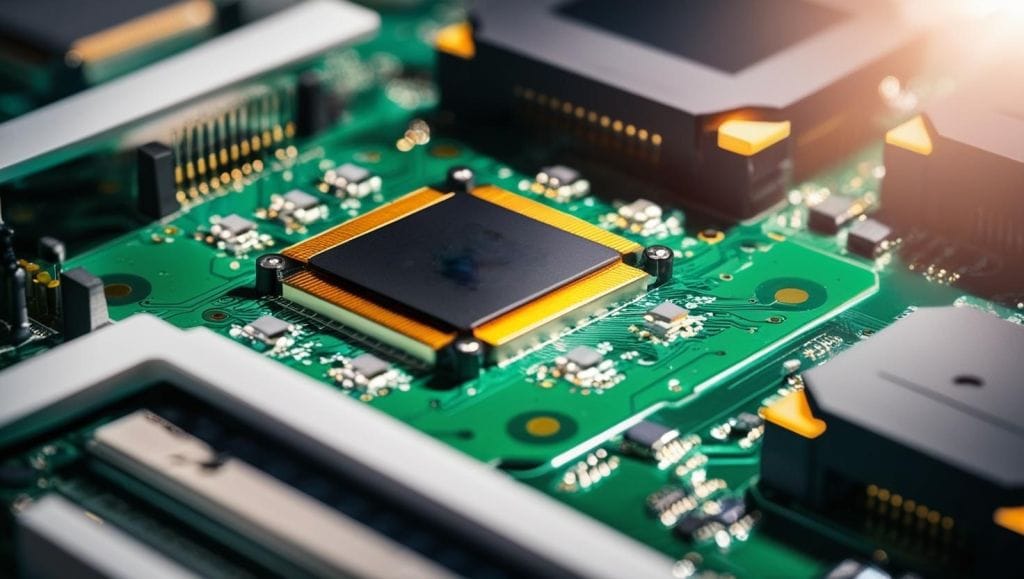
The acronym PCB stands for printed circuit board, which is a component used for mounting electronic circuits. The origins of the printed circuit board date back to the 1950s in the USA, where it was initially used to manufacture components dedicated to the military industry. It was the implementation of PCBs that paved the way for mass production.
How does it work?
At first glance, a PCB is a simple component made of insulating material and conductive copper foil. The solder pads and traces placed upon it create a conductive surface. Its manufacturing involves both mechanical processes – such as drilling holes – and chemical processes, including metallization, tinning, or etching, which establishes the final interconnection pattern.
Types of PCBs
The manufacturing process of a printed circuit board depends on the specific type of board required. The type of PCB is determined by:
Number of conductive sides: Single-sided or double-sided boards – typically dedicated to less complex devices.
Layer count: Ranging from single-layer to sophisticated multi-layer boards.
Copper foil thickness: Selected based on the required current-carrying capacity.
Substrate material: Such as Teflon, epoxy laminate, FR-4 (glass-reinforced epoxy laminate), or Kapton.
Mechanical construction: Rigid, flexible (Flex), or rigid-flex PCBs.
Industry Applications
The choice of PCB type is determined by the final product it will be integrated into. Our circuits are used across various sectors, including:
Industrial: Manufacturing of control systems and surveillance systems.
Automotive: GPS navigation, audio systems, on-board computers, and sensors.
Energy: Power supplies and power converters.
Medical: ECG monitors and a wide range of medical diagnostic devices.
Consumer electronics (home appliances/AV): Smartphones, televisions, and printers.
Defense & military: Radar systems, drones, computers, and communication systems.
As shown, the applications for PCBs are incredibly versatile, which is why their quality must be uncompromising. When ordering printed circuit boards, it is essential to pay close attention to the substrate material. Its key characteristics – such as durability and reliability under harsh conditions like moisture, high temperatures, or vibrations – are critical. Furthermore, precisely engineered traces are the guarantee of a device’s proper and consistent operation.
Summary
When starting a partnership with an electronics manufacturer, ensure they offer a dedicated design stage as part of their services. This process requires not only profound expertise in electronics but also access to a modern machinery park, advanced prototyping techniques, and high-quality components – including printed circuit boards. In this era of innovation and miniaturization, the importance of PCBs continues to grow, as they remain the core of nearly every device we use in our daily lives.