The “Cheap Design” Trap: How to Save 30% on Batch Production with Design for Manufacturing (DFM)

Imagine you are building a house and decide to skimp on the architect, only to find out later that poorly planned walls mean the plumbing is going to cost a fortune – it is exactly the same with electronics. Many companies fall into the trap of a cheap design, completely unaware that whatever the engineer draws on the schematic directly dictates the future price of every single resistor, board, or hour of assembly machine operation. Often, a minor tweak in component selection right at the outset is all it takes to keep an extra 30% of margin in your pocket during mass production.
In the following sections, we will look at how to wisely invest in the “foundations” of your device so that subsequent manufacturing does not turn into a bottomless money pit.
Why is a “cheap” design the most expensive trap in business?
Many entrepreneurs look at an engineer’s quote as a simple service bill: “If this one designs for 5000 and that one for 15000, why overpay?” This is a trap because, in the world of electronics, the design price is just the tip of the iceberg – the true costs are hidden beneath the surface, waiting in the production process of thousands of units. A cheaper designer often focuses solely on making the device “simply work” on their desk, without considering whether the components they selected will be available in a year or if their assembly will require slow, manual labor.
Imagine your designer used ten different types of screws where a single standard one would have sufficed. For them, it is just a moment of drawing; but for your production line, it means ten times more operations, machine setups, and potential mistakes. It is precisely through these details – unnoticeable at first glance – that your money leaks away. By paying slightly more for an experienced expert at the beginning, you are actually purchasing their knowledge of how to avoid all those “minor” mistakes that can cost a fortune at scale.
DFM, or How to Design with the Factory (and Your Wallet) in Mind
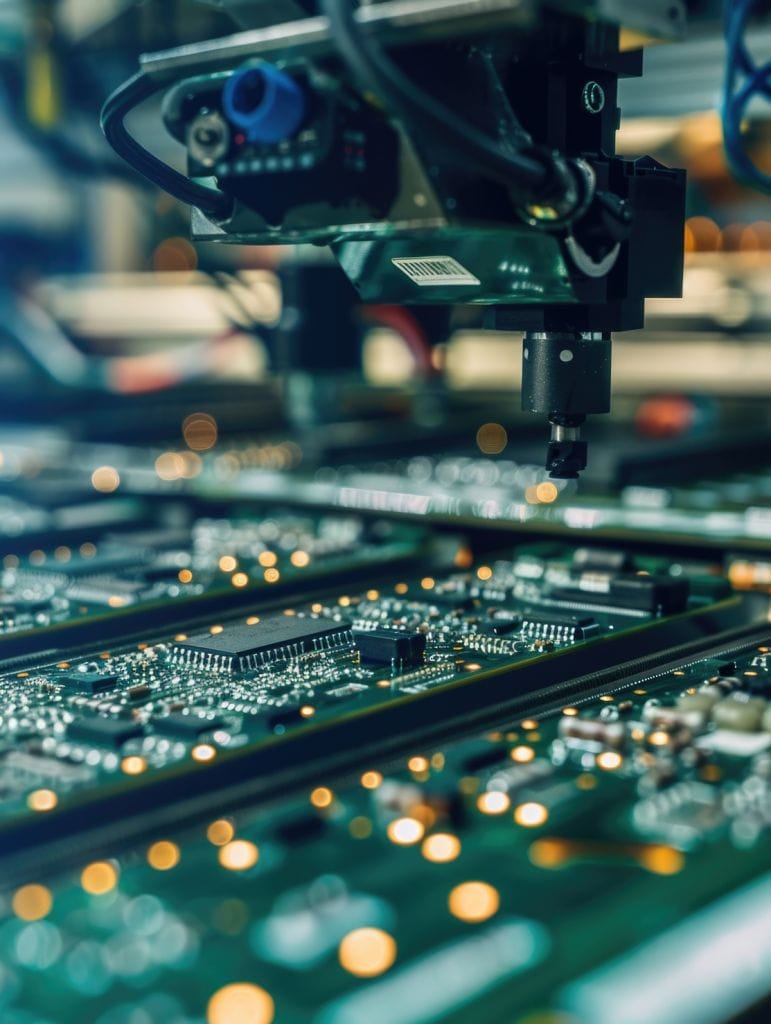
You may have a brilliant idea for a device, but if it isn’t designed with DFM (design for manufacturing) principles in mind, the factory might hand you a bill that will knock you off your feet. DFM simply means “designing for production” – arranging the components on the board and selecting parts in such a way that factory machines can assemble your product lightning-fast, flawlessly, and without human intervention wherever it is unnecessary.
Imagine assembling flat-pack furniture: if the instructions are clear and all the screws are identical, you’ll put the wardrobe together in an hour, if every screw is different and you have to use five different wrenches, you’ll spend the whole day on it. In electronics manufacturing, this “extra time” translates into thousands of PLN vanishing from your profit margin.
In practice, DFM means that even while drawing the schematic, the engineer is already thinking about how your board will look on a production panel (the large sheet of laminate from which the finished pieces are cut). If the designer positions the elements smartly, a single sheet of material might fit 20 units instead of 15, automatically slashing the cost of each unit by a dozen percent. It also means avoiding components that require manual soldering. By investing in DFM, you ensure your product flows through the production line like clockwork, meaning you pay for results, not for troubleshooting.
Cost Analysis: Where is your 30% profit going?
When you look at a finished device, you see an enclosure, buttons and perhaps a glowing LED; but to the factory, your product is primarily a BOM (Bill of Materials) – the shopping list for every single part. It is right here, within the maze of hundreds of tiny components, where the biggest savings are hidden. If an engineer selects a rare processor available from only one supplier worldwide, you risk having production grind to a halt in six months because a single part is missing – and factory downtime yields the most expensive minutes in your business.
Another margin thief is the lack of standardization. Imagine your designer used ten different types of resistors with nearly identical parameters in your device. For the assembly machine, this means stopping more frequently to switch component “feeders.” However, if an expert plans the schematic so that instead of ten different components, a single universal one is used in ten places, you leverage economies of scale: you buy more of one part (making it cheaper!), and the automated system mounts them without unnecessary interruptions.
It is also worth paying attention to production waste. If the designer “arranges” your device to maximize every single centimeter of the laminate sheet, it will slash the cost of the raw board itself by a dozen percent, without changing a single function of your product.
Scenario A vs. Scenario B: How Much Does a “Cheaper” Engineer Actually Cost You?
To best understand the figures we are talking about, let’s imagine two entrepreneurs who want to manufacture 1,000 smart controllers:
Entrepreneur A chose the cheapest design quote for 5,000 PLN. The device works, but the designer didn’t worry about component availability or assembly speed. The result? Manufacturing a single unit costs him 100 PLN. The total cost (design + production) comes out to 105,000 PLN.
Entrepreneur B invested in an experienced design firm and paid 15,000 PLN for the design. The experts optimized the component list and board panelization. Consequently, the manufacturing cost per unit dropped to 70 PLN. The total cost for Entrepreneur B amounted to 85,000 PLN.
Even though the design itself was three times more expensive, Entrepreneur B is already 20,000 PLN ahead on the very first batch of 1,000 units. True profit does not come from a low invoice for engineering services, but from a low manufacturing cost per individual unit.
Summary: Your product is an investment, not just a cost
Electronics design is a marathon where victory is determined by preparation at the starting line. As we have seen, saving a few thousand PLN during the schematic phase is often just an illusion, brutally shattered by the first factory invoice. Remember, a good engineer is not an expense – they are your best financial advisor, capable of “conjuring up” extra margin where others see only cables and boards. When choosing a design partner, don’t just ask if the device will work, ask how cheaply and efficiently it can be manufactured in the thousands.
Want to see if your product could cost less?
Don’t let schematic errors eat away at your profits. If you are planning a new product launch or already have a finished design and want to optimize it before mass production – we are here to help.
Let’s take the first step together:
Book a free DFM audit: We will analyze your design from a manufacturing cost perspective and pinpoint areas where you can realistically save money.
Consult your idea: Have a concept but don’t know where to start? Schedule a brief call with our expert.
Contact us today and start designing with profit in mind.