HAVE AN IDEA BUT UNSURE ABOUT ITS FEASIBILITY? ARE YOU LOOKING FOR A BUSINESS PARTNER TO TAKE ON THE CHALLENGE?
Don’t hesitate to verify if your potential manufacturer also offers design and prototyping services.
These stages are exactly what allow for error detection and functional improvements before the device is moved into mass production. As an electronics manufacturer, we participate in a wide variety of projects every day. Today, we want to focus on the role of prototyping. Why is this step so critical? Read our insights below.
Where to Start?
The first step is answering a fundamental question: what are your expectations?
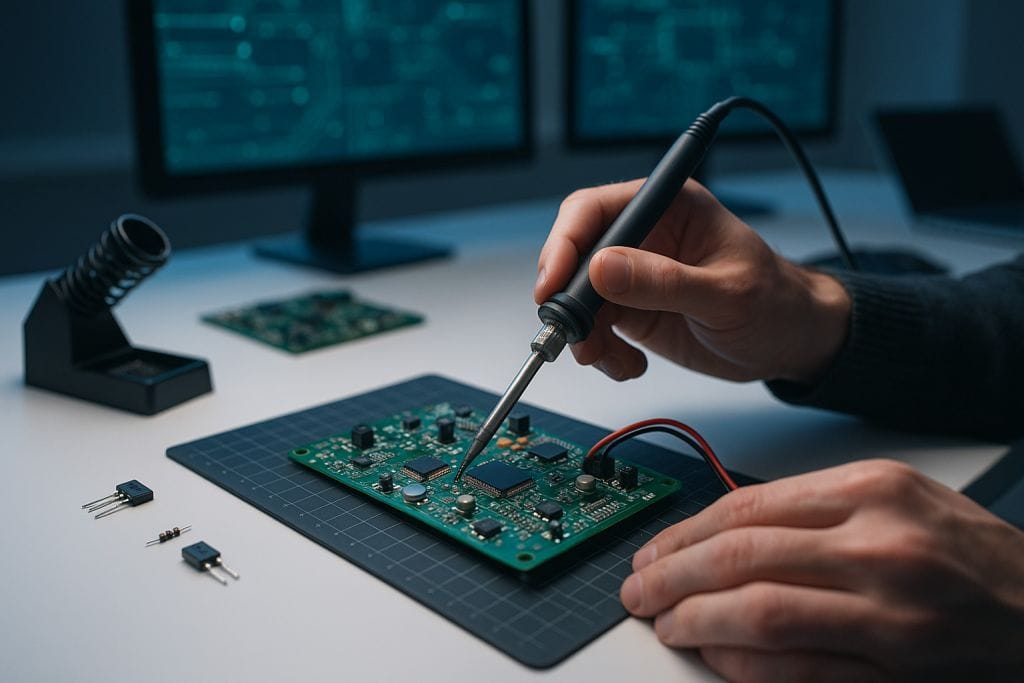
If you want to see how the device will look, check its dimensions, or verify if it functions as intended – start by commissioning a prototype.
Design
The next step is the design of the schematics and the Printed Circuit Board (PCB), during which components and technologies are selected. Our design team uses a variety of advanced tools to ensure you receive a precisely engineered device. The choice of the PCB size is crucial at this stage, as it is where all the elements required for the device’s proper operation are placed. All components used must meet parameters that ensure uninterrupted performance in a specific environment. High-quality components are a guarantee of longevity for your device.
Assembly and Prototype Commissioning
At this stage, the physical prototype is manufactured and work on the software begins. This is the moment that verifies if the design assumptions were correct and if the chosen solutions are effective. Next, we move on to testing. It is best to conduct this step both in a laboratory and in conditions that simulate the client’s real-world environment.
We Have a Prototype – What’s Next?
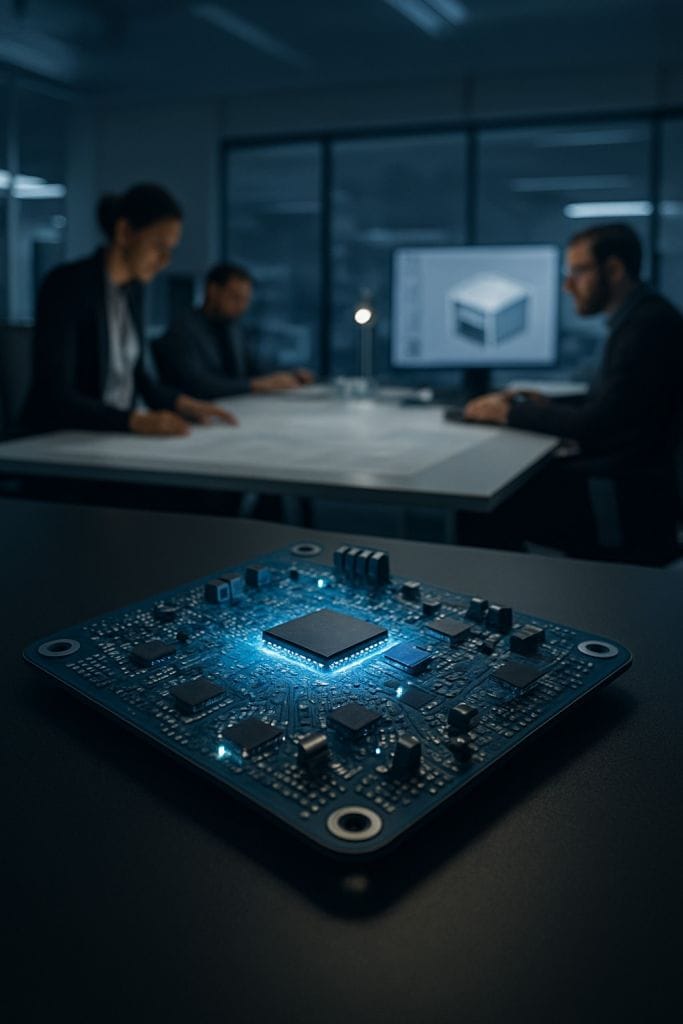
Now is the time to refine any elements that require correction, ensuring the final product is defect-free and operates reliably.
Why is prototyping worth it?
Proof of concept: Helps verify if the device functions as intended before committing resources to mass production.
Functional testing: Allows for the detection of design flaws, refinement of electronic performance, and optimization of the PCB layout.
User & stakeholder feedback: A prototype can be presented to investors, partners, or end-users – their feedback is invaluable.
Time and cost savings: Errors detected during the prototyping stage are significantly cheaper to fix than those discovered after production launch.
Readiness for certification and production: The prototype serves as the foundation for further steps: environmental testing, certifications (e.g., CE, ATEX), and the preparation of final manufacturing documentation.
Summary:
In our view, a prototype is an indispensable part of production. This test version saves not only money but, above all, time and unnecessary stress. When launching a new project, haste is never a good advisor – which is why the prototyping stage is an investment that truly pays off.