The Race for the Market: 5 Critical Bottlenecks in Electronics Design That Delay Your Time-to-Market

Imagine your team has developed a breakthrough device that early customers are already eagerly awaiting, but suddenly the entire process grinds to a halt due to a single missing component or an error in the documentation. Every week of delay in time-to-market (the time spanning from initial concept to commercial launch) means not only slipping profits but also the risk of a competitor taking your spot on the shelf. Shortening this process is not a blind sprint, it is strategic planning that turns an innovative idea into real financial success.
Design for Manufacturing (DfM): Avoiding a “Work of Art” That No One Can Actually Build
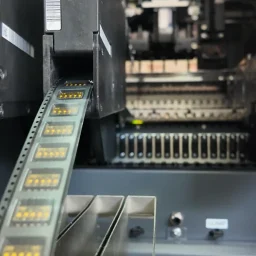
A frequent mistake is focusing solely on making the prototype work on the engineer’s desk, forgetting that ultimately, a machine must assemble thousands of these devices quickly and repeatably. If the design is overly complex – for instance, if components are packed too tightly – manufacturing costs skyrocket, and the risk of defective units becomes a real threat to your wallet. By utilizing a DfM (Design for Manufacturing) approach, we select assembly-line-friendly solutions right at the schematic drafting stage. This prevents costly late-stage revisions and “redesigning” the device at the eleventh hour, which is the number one reason product launches get pushed back by long months.
The Component Trap: Don’t Let a Single Missing Part Halt Your Entire Company
The Implementation Roadmap: Technical Audit and Data Integration
Selecting parts for your device involves far more than just chasing the lowest price; it is first and foremost an exercise in risk management, the consequences of which you will feel in a year or two. It is common for an engineer to pick a cutting-edge, excellent component that is manufactured in only one factory worldwide – a scenario known as single-sourcing. If that factory experiences downtime or the component transitions to NRND status (not recommended for new designs, meaning the manufacturer plans to phase it out), your entire product suddenly becomes unmanufacturable.
To prevent this, we build a BOM (Bill of Materials) right at the outset that includes verified alternative parts for critical components. Consequently, if a specific chip suddenly goes out of stock at the distributor, you won’t have to redesign the board from scratch, saving you weeks of frustration and downtime. A strategic approach to your shopping list guarantees you won’t wake up two years from now with a product you cannot assemble, even as customer orders keep rolling in.
Certification and Testing: Passing the State Exam on the First Try
The Implementation Roadmap: Technical Audit and Data Integration
Many entrepreneurs treat certification (such as the CE mark) as a final, formal checkbox before sales commence. In reality, it is one of the most challenging hurdles, capable of turning an entire project upside down. If a device generates excessive electromagnetic interference (EMC non-compliance), the certification laboratory will block it from entering the market, leaving you with a warehouse full of finished goods you legally cannot sell. Fixing errors at this stage is a budgetary disaster, as it frequently requires rerouting the PCB traces and repurchasing components.
The key to success is pre-compliance testing – running simplified tests early in the prototyping phase. Think of it as a mock exam, it allows us to catch the hardware’s “weak spots” under controlled conditions before you shell out for expensive testing at an official institute. This approach lifts a massive burden of liability off your shoulders and ensures the product will breeze through restrictive testing without costly rework, shaving long weeks off your runway to launch.

Parallel Hardware and Software Development: Stop Waiting for the Finished Board with Folded Hands
In a traditional workflow, software developers often wait around for hardware engineers to finish designing the physical electronic board, which creates unnecessary bottlenecks. We counter this by utilizing a workflow that allows writing code (embedded software/firmware) almost from day one of the project, leveraging off-the-shelf development kits that simulate your target device’s behavior. As a result, when the first batch of prototypes rolls off the assembly line, the software is already largely complete and tested, enabling an immediate system spin-up.
This dual-track operation not only drastically shortens implementation time but also catches logic errors early, before they are “etched” into physical copper on the PCB layout. We use virtualization and simulation techniques to test how the system responds under harsh conditions before we even touch a soldering iron. Ultimately, instead of departments wasting time waiting on each other, you receive a cohesive, working solution in record time.
SUMMARY
Shortening time-to-market is not magic; it is the sum of right decisions made at the very beginning of the journey. As we have seen, success is not dictated solely by a great idea, but primarily by anticipating pitfalls: from choosing secure components and designing for mass production to seamless certification. Every day saved by avoiding rework is a real dollar that stays in your budget, allowing you to outpace the competition faster. Remember, in the world of high tech, victories belong not just to the best, but to those who can efficiently deliver a finished solution into the customer’s hands.
Want to make sure your next project doesn’t get stuck in a deadlock?
We invite you to explore our services. As your technology partner, we shoulder the burden of technical risks, guiding you through the entire process – from the first line on a schematic to a finished product with certificate in hand. Discover how our engineering and manufacturing expertise can become the fuel for your business growth.