Custom Electronics vs. Off-the-Shelf Modules: How to Take Control of Margins and the Manufacturing Supply Chain?

The rapid evolution of technology – from a niche solution to a market standard – has forced manufacturers to confront an entirely new scale of operational challenges. Scaling production using off-the-shelf, general-purpose electronic modules often requires accepting squeezed margins and facing supply chain disruption risks over which the manufacturer has no direct control. Transitioning from an assembly-based model to one centered on proprietary hardware solutions enables full control over device architecture and optimizes manufacturing costs.
Profitability: Where is the margin hidden?
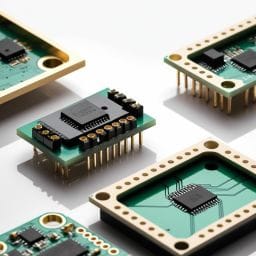
Implementing proprietary electronics drastically optimizes the BOM (Bill of Materials) structure. When using off-the-shelf modules, a manufacturer pays not only for the components themselves but also for the supplier’s margin and logistics overhead. By designing a dedicated PCB (printed circuit board) layout, the company invests in its own intellectual property. At a scale of just a few hundred units per year, this can drive down the per-unit cost by up to several dozen percent.
A pivotal financial aspect is also gaining complete control over the aftermarket and post-warranty service. By utilizing proprietary solutions, the manufacturer becomes the sole proprietor of unique components, which mitigates the risk of unauthorized servicing via third-party substitutes available on the open market. This strategy not only secures the immediate profitability of device sales but also builds a long-term, stable revenue stream from maintenance and upgrades.
Supply chain sovereignty
A proprietary design brings a drastic reduction in downtime risks. When relying on off-the-shelf modules, a manufacturer is entirely dependent on the purchasing policies and priorities of a third-party vendor – if a given general-purpose controller is discontinued or its supply is halted, the entire assembly process grinds to a halt. Custom electronics, on the other hand, allow for component diversification. Engineers can select microprocessors and relays that are industry standards, available from multiple distributors simultaneously.
Partnering with EMS (Electronic Manufacturing Services) providers ensures complete inventory transparency. In times of crisis, an in-house R&D team can swiftly validate a replacement for a missing chip and revise the board layout, a workaround that is impossible when dealing with closed, third-party proprietary solutions.
Technological advantage: proprietary “smart”
A proprietary hardware platform forms the foundation for building unique added value that truly differentiates a product in a saturated market. Unlike solutions based on off-the-shelf PLC controllers, custom electronics lower the final solution cost and optimize the design strictly around the necessary functionalities.
Full control over both the software and hardware layers opens the door to advanced IoT (Internet of Things) diagnostics and remote servicing, drastically cutting the manufacturer’s operational costs. A dedicated communication module enables the collection of granular, real-time operating data from the device, making it possible to detect anomalies before they lead to failure – a practice known as predictive maintenance.
Implementation strategy: from design to production
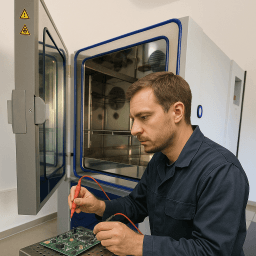
The transition process from off-the-shelf modules to dedicated electronics requires meticulous phased planning to maintain production continuity and ensure the highest system reliability. A critical first step is conducting a technological audit to define unique requirements. Partnering with an experienced design house enables the creation of a prototype that undergoes rigorous electromagnetic compatibility (EMC) testing and environmental stress simulations under extreme conditions.
In parallel with hardware development, the firmware layer must be developed, as it drives the device’s intelligence and allows for future updates without the need for physical intervention on the printed circuit board. Ultimately, choosing a professional R&D and EMS (Electronic Manufacturing Services) partner guarantees mass production repeatability and access to advanced quality control methods, such as automated optical inspection (AOI) and functional testing (FCT).
SUMMARY
Transitioning from an assembly-based model to production centered on proprietary electronic solutions is a pivotal milestone in the evolution of any manufacturer. Regaining control over the BOM cost structure, breaking free from global supply chain bottlenecks, and the ability to implement proprietary, unique control algorithms are investments that pay off – not only in the form of higher margins but, above all, as a sustainable competitive advantage. In an era of increasing device standardization, it is this dedicated “brain” that becomes the vehicle for innovation and a guarantee of reliability, building trust among both installers and end-users.
Developing a custom hardware platform does not have to be a process fraught with high technological or organizational risk. The key to success lies in choosing an experienced partner who will guide your company through the entire design lifecycle – from system requirements analysis and PCB layout design to final EMS contract manufacturing.
We invite you to explore our services, designed to help you create proprietary electronics tailored to the specific needs of your products, granting you full technological and business sovereignty.